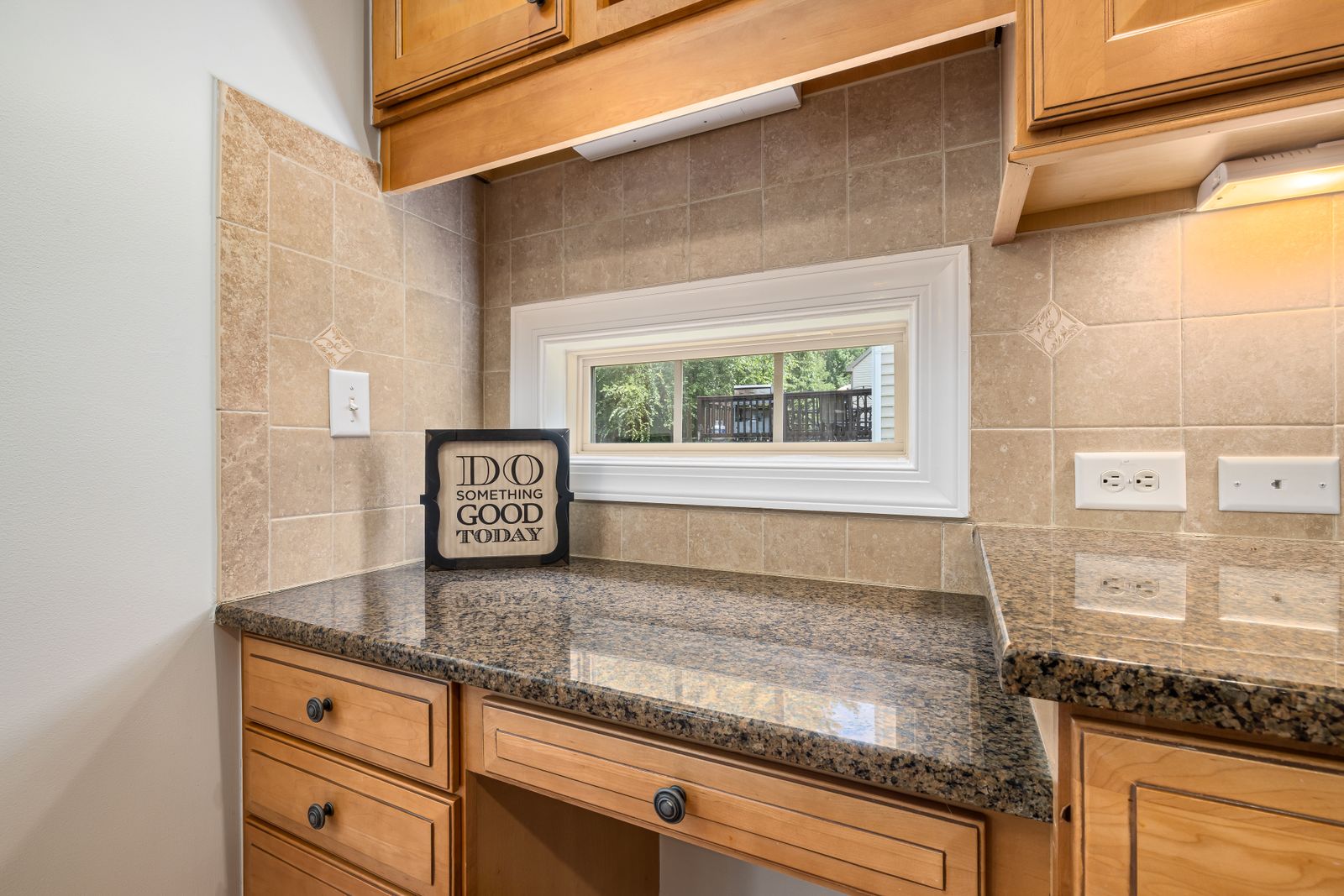
A counter can feel full even when every item on it is useful. The problem is often the arrangement: a toaster in the prep area, mail beside the kettle, or a utensil crock that holds tools you rarely reach for. Start by deciding what this surface needs to do on a normal weekday.
Choose one working zone
Clear a space large enough for your cutting board, a bowl, and your hands to move. Keep it clear while you sort the rest of the counter. Group the things you use together: coffee supplies near the coffee maker, cooking utensils near your prep area, and incoming mail somewhere outside the kitchen. Try this arrangement for a few days before buying storage.
Give the daily tools a limit
Set out the utensils you used in the last few meals. Those are your candidates for a small crock; duplicates and occasional tools can move to a drawer. A tray can give oil or coffee supplies a defined footprint, but check that it does not take more space than the loose items. An existing plate or shallow basket is a useful trial.
Measure the awkward bits
Write down available width and depth, plus the clearance below upper cabinets. Include handles and lids in your measurements. Check whether appliance doors can still open and whether you can wipe behind everything. If you are trying to keep this reset within a $30 total budget, choose one piece that solves the largest remaining problem instead of buying a matching set.
Your before-you-buy checklist
- Clear a cutting-board-sized prep zone
- Keep only everyday utensils on display
- Test a tray you already own
- Measure depth and cabinet clearance
- Buy one missing piece, if needed
SHOP WITH A PLAN
Useful options to compare
These links open Amazon search results for the item types below. Compare dimensions, materials, care instructions, and current prices before choosing. We have not tested individual products, and we do not guarantee price, availability, or suitability for your home.
A compact utensil holder
Look for a base that fits your daily tools without crowding the prep area. Compare the listed dimensions; the tallest holder is not always the most useful.
Compare options on Amazon ↗ (paid link)A small counter tray
Measure your grouped items first. Choose a washable surface and check whether handles or raised edges reduce usable space.
Compare options on Amazon ↗ (paid link)An adjustable shelf riser
Use it inside a cabinet if moving mugs off the counter creates a better prep zone. Check shelf width and the height of items underneath.
Compare options on Amazon ↗ (paid link)